Product Description
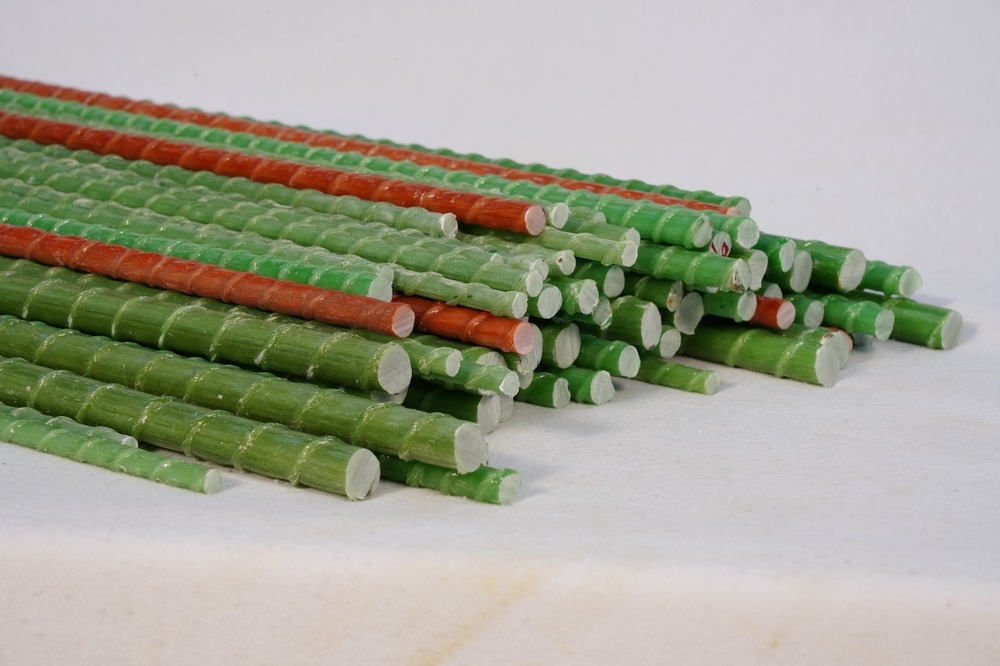
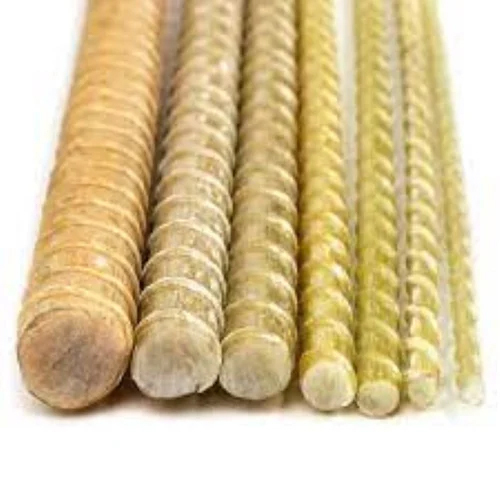
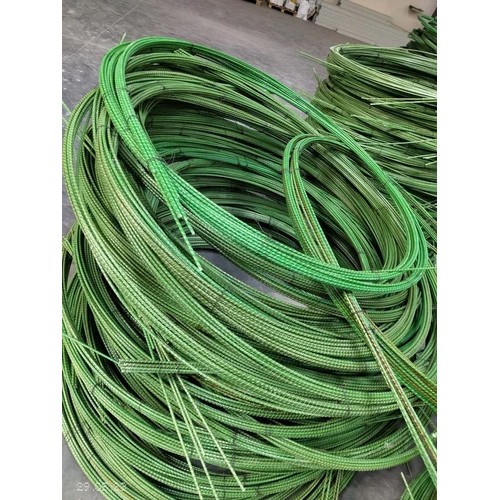
Round Industrial GFRP Rebars are high-strength, lightweight, and corrosion-resistant reinforcement bars designed for industrial construction and infrastructure projects. Made from Glass Fiber Reinforced Polymer (GFRP), these rebars offer excellent tensile strength, chemical resistance, and durability, making them ideal for harsh and corrosive environments where traditional steel may deteriorate.
They are widely used in industrial buildings, bridges, marine structures, chemical plants, and precast concrete elements, providing long-lasting reinforcement without the risk of rust or corrosion.
Key Features:
-
Corrosion and chemical resistant
-
High tensile strength and durable
-
Lightweight and easy to handle
-
UV and weather resistant for long service life
-
Ideal for industrial construction and infrastructure projects
Request
Callback
Round Industrial GFRP Rebars are high-strength, lightweight, and corrosion-resistant reinforcement bars designed for industrial construction and infrastructure projects. Made from Glass Fiber Reinforced Polymer (GFRP), these rebars offer excellent tensile strength, chemical resistance, and durability, making them ideal for harsh and corrosive environments where traditional steel may deteriorate.
They are widely used in industrial buildings, bridges, marine structures, chemical plants, and precast concrete elements, providing long-lasting reinforcement without the risk of rust or corrosion.
Key Features:
-
Corrosion and chemical resistant
-
High tensile strength and durable
-
Lightweight and easy to handle
-
UV and weather resistant for long service life
-
Ideal for industrial construction and infrastructure projects
Request
Callback
Exceptional Corrosion ResistanceGFRP Rebar is engineered to withstand the harshest environments, including exposure to saltwater and chemical agents. Its non-corrosive properties protect reinforced concrete structures from degradation, ensuring structural integrity and reducing long-term maintenance costs.
Lightweight and High StrengthWeighing about a quarter of steel rebar, GFRP Rebar simplifies transport and installation without sacrificing performance. Its tensile strength exceeds 1000 MPa, making it suitable for high-load applications while reducing the overall dead load on structures.
Superior Electrical and Thermal PropertiesGFRP Rebar is electrically non-conductive and electromagnetic neutral, making it perfect for installations near sensitive electronic equipment or where electromagnetic interference must be avoided. Its low thermal conductivity also enhances its performance in a wide range of temperatures.
FAQ's of GFRP REBAR:
Q: What is GFRP Rebar and how is it manufactured?
A: GFRP Rebar is a cylindrical reinforcement bar composed of glass fibers embedded in a polymer matrix, typically E-glass or alkali-resistant glass. It is manufactured through the pultrusion process, where continuous glass fibers are pulled through a resin bath and then shaped and cured to form strong, durable rods.
Q: How does GFRP Rebar benefit concrete structures compared to conventional steel rebar?
A: GFRP Rebar offers several advantages: it is non-corrosive, which extends the lifespan of concrete structures beyond 100 years; it provides superior bond strength within concrete; and being lightweight, it simplifies logistics and installation while reducing structural weight.
Q: Where is GFRP Rebar best used?
A: GFRP Rebar is ideal for infrastructure projects in aggressive environments-such as marine structures, bridges, tunnels, and foundations-where traditional steel rebar would be vulnerable to corrosion or chemical attack. It is also preferred in projects requiring non-conductive materials.
Q: When should GFRP Rebar not be used?
A: GFRP Rebar is not recommended for structures where high fire resistance is essential, as it has limited fire resistance properties. For fire-prone applications, consult project specifications and fire safety guidelines before selection.
Q: What surface treatments are available for GFRP Rebar to enhance performance?
A: The bars can be ribbed or sand coated to improve mechanical bonding with concrete. Additionally, epoxy or sand coatings are used to further enhance durability and bond strength in demanding construction environments.
Q: How is the bond strength of GFRP Rebar compared to that of steel rebar?
A: GFRP Rebar demonstrates superior bond strength to concrete compared with traditional steel rebar, particularly when surface-treated, ensuring enhanced load transfer and structural integrity in concrete applications.
Q: What is the typical service life of GFRP Rebar in construction projects?
A: GFRP Rebar has a service life that exceeds 100 years when used in concrete structures, making it a reliable and long-term solution for critical infrastructure projects.