FAQ's of GFRP Fencing:
Q: How does GFRP fencing provide safety in industrial environments?
A: GFRP fencing is highly non-conductive and fire-resistant, ensuring electrical insulation and protection where electrical hazards exist, while its robust construction ensures effective barrier solutions for machinery, equipment, and perimeter segregation.
Q: What are the primary benefits of the caster wheel mobility feature?
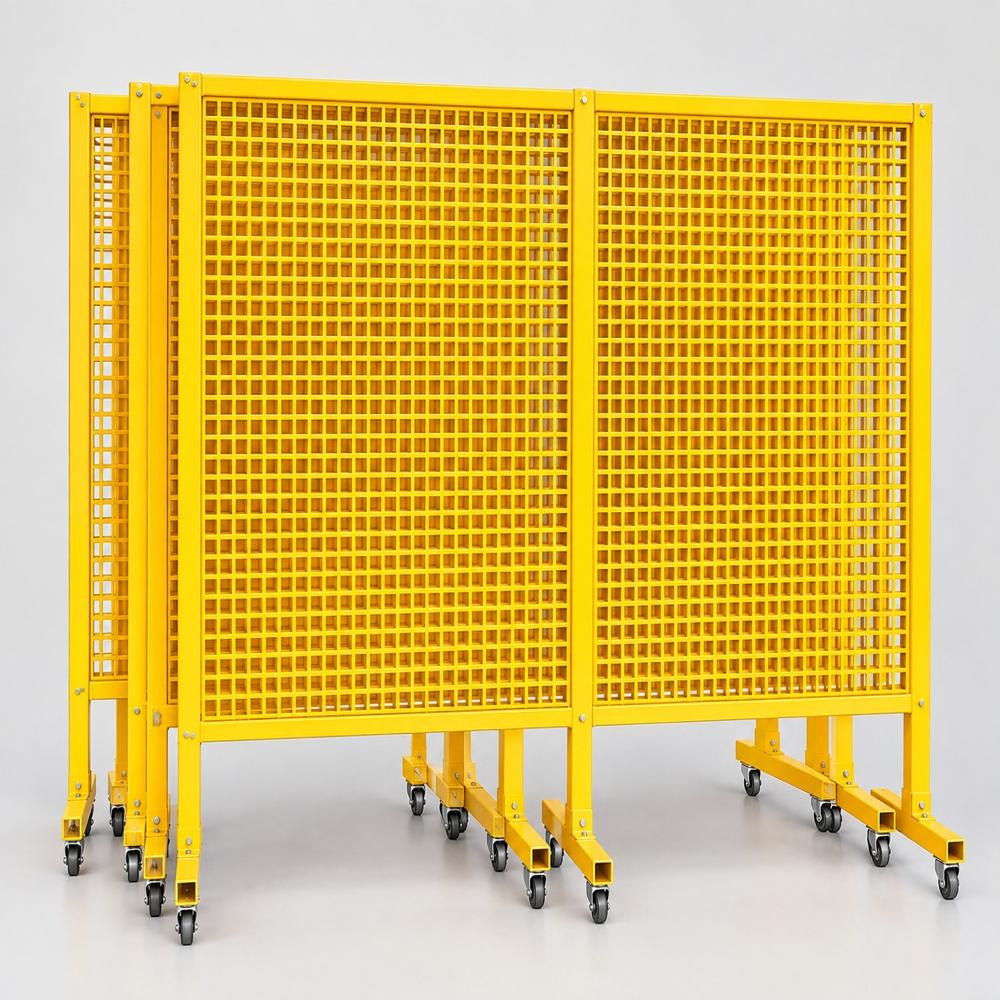
A: Caster wheels render the fencing mobile, allowing users to quickly reposition or move panels as needed for temporary zoning or access, particularly suitable for frequently changing worksite layouts or events.
Q: Where can GFRP fencing be effectively used beyond traditional boundaries?
A: Apart from property fencing, GFRP panels excel in garden protection, lawns, segregating industrial equipment, and enhancing security for commercial or sensitive areas, thanks to their durability, corrosion resistance, and customizable dimensions.
Q: What is the process for installing these fencing panels?
A: Installation can be achieved using either bolt & nut fixtures or quick-lock detachable connectors. Both methods are user-friendly, enable secure fixing, and allow for effortless dismantling or relocation when required.
Q: How resistant is GFRP fencing to environmental factors?
A: GFRP panels are engineered to withstand weather extremes, including humidity, rain, and intense sunlight. Their UV stability, corrosion resistance, and self-extinguishing properties make them ideal for outdoor applications, even in chemical plant environments.
Q: When can buyers expect delivery after placing an order?
A: Buyers benefit from quick dispatch procedures, with delivery timelines dependent on order size and destination. Most orders are processed swiftly, ensuring minimal lead time between purchase and receipt.



 Send Inquiry






